Your Playlist Is a Polygraph: 11 Spy-Movie Needle Drops That Give the Game Away
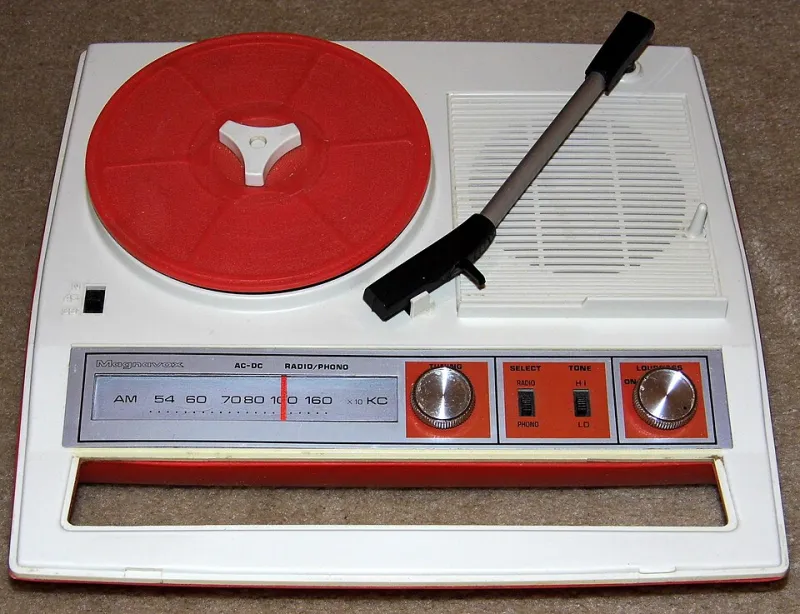
Photo: Joe Haupt from USA, CC BY-SA 2.0, via Wikimedia Commons
Every spy movie runs two surveillance operations at once. One has parabolic mics and a van full of sweating technicians. The other has a turntable, a jukebox, or — in 2026 — a licensor's blessing and a sync fee with a lot of zeros. The second operation is cheaper, and honestly, it's better at its job. A well-placed needle drop doesn't underscore a scene. It cross-examines it.
Here at 007Eleven, we take this seriously enough to argue about it at Thanksgiving. Below is our ranking of eleven licensed cues that do half the interrogation before a single line of dialogue lands — the ones that flip a scene from flirtation to threat while the actors are still pretending everything's fine.
Ground rules: the song has to change what you know. It has to make a room feel like a trap, or a kiss feel like a confession. Score doesn't count — we're talking needle drops, the borrowed stuff, the b-sides, the tracks somebody had to clear with a lawyer.
The Countdown
11. The Man from U.N.C.L.E. — "Compared to What" (Roberta Flack)
A truck escape scored to a song about systemic rot is a flex. The scene is loud, sunny, and fun; the lyric underneath says everybody's lying, including the people you're rooting for. Guy Ritchie's whole movie is a fashion shoot with a body count, but this one cue gives it a thesis statement. Bonus points for making a Cold War chase feel like a dinner party that got out of hand.
10. Kingsman: The Secret Service — "Free Bird" (Lynyrd Skynyrd)
The church massacre is the rare sequence where the needle drop does the opposite of interrogation — it releases the pressure valve. But listen to what the song is asking for while roughly forty people stop flying anywhere. The joke and the horror share a melody, and that's why it's still the most quoted three minutes of the franchise. You'll never hear that guitar solo at a wedding again without checking the exits.
9. Mr. & Mrs. Smith — "Mondo Bongo" (Joe Strummer & The Mescaleros)
A tango in a crowded dance hall, two married assassins, and a song that sounds like a vacation you'd regret. Nothing is said out loud. Everything is said out loud. The cue works because it's genuinely romantic right up until it's genuinely a standoff — which is the entire marriage, honestly, and also the entire spy genre.
8. Mission: Impossible — Rogue Nation — "Nessun Dorma" from Turandot
Opera as a murder scheduling tool. Puccini's aria promises a dawn where nobody sleeps and secrets get revealed, and the movie takes that literally, staging a hit in the wings while the tenor soars. It's the classiest possible way to say "someone in this building is about to have a very bad night." The Vienna sequence remains the franchise's most elegant flex.
7. Atomic Blonde — "Blue Monday" (New Order)
The stairwell fight is a single take, and the song is a drum machine that refuses to blink. New Order's coldest hit turns a brutal close-quarters brawl into something weirdly hypnotic — you're watching a person take damage in real time while the synths insist everything is under control. That gap between the music's calm and the body's chaos is the whole Cold War in four minutes.
6. The 2026 Trailer Cover (you know the one)
This entry isn't a scene — it's an institution. This year's spy-adjacent slate has been absolutely marinated in slowed-down, reverb-soaked covers of songs your parents made out to, and the effect is a built-in lie detector: instantly tense, instantly familiar, instantly ominous. It's cheap grammar, but it works, and 2026 has leaned on it like a crutch with a licensing deal. See the sidebar below. We have thoughts.
5. The Bourne Identity — "Extreme Ways" (Moby)
Moby's weary little loop of paranoia became Jason Bourne's theme song partly because it sounds like a man walking away from a building he just destroyed. It's the rare end-credits cue that also functions as a character summary: tired, jittery, oddly hopeful. Every sequel that brought it back knew exactly what it was doing. So did we. We let it happen.
4. No Time to Die — "We Have All the Time in the World" (Louis Armstrong)
Borrowing a 1969 Bond ballad and playing it over a honeymoon that you already know is doomed is a war crime committed by a music supervisor. Armstrong's vocal is so warm it hurts, and the film uses that warmth as a promise it has no intention of keeping. It's not a needle drop. It's a confession signed in advance.
3. Casino Royale (2006) — "You Know My Name" (Chris Cornell)
The rare title song that also does plot work. Cornell's growl announced a new Bond before Daniel Craig had finished his first parkour shift, and the lyric — arrogance, reinvention, a man telling you exactly who he is and daring you to check — basically reads like a dossier written by the subject himself. Twenty years on, it still plays like a threat with a backbeat.
2. The Third Man — the zither (Anton Karas)
A single stringed instrument, plucked with unsettling cheerfulness, following a man through a ruined city. The zither is the original unreliable narrator: it sounds like a café, it feels like a funeral. Every scene it touches gets a second reading, and that's the highest honor a cue can earn. Also, it's the only entry on this list that could plausibly be described as "jaunty doom."
1. Dr. No — "Three Blind Mice"
The original, and still the blueprint. Three assassins walk through Kingston whistling a nursery rhyme, and the movie tells you everything — who they are, what they're about to do, and how little the world cares — before a single gunshot. Cheerful melody, murderous intent, zero dialogue required. Sixty-odd years later, every music supervisor who drops a sunny song over a terrible deed is quoting this scene, whether they know it or not.
Sidebar: Why Every Spy Trailer Sounds Like a Haunted Car Commercial
Walk through a multiplex lobby in 2026 and you'll hear the same three tricks on loop: a beloved pop song pitched down, a choir doing a cover of something from 1987, and one (1) ominous bwoomp. Why?
Because trailers are now built for the phone in your hand, not the seat in the theater. A familiar melody stops the thumb. A slowed-down version signals "this one's serious." And a licensed track — even a cheap one — buys you the emotional memory of every other movie that used it, at a fraction of the cost of building a theme from scratch.
It's also a data play. Studios can watch which trailer edits travel, and the ones with a recognizable cover almost always travel further. The result is a decade of marketing that sounds like one long, haunted Spotify playlist.
Which is fine — until the movie itself opens with a real, weird, risky cue and reminds you how good this trick can be when it's used like a scalpel instead of a fog machine.
The Verdict
A licensed song is the cheapest informant in the business. It'll tell you who's lying, who's about to die, and who's about to fall in love and regret it — and it'll do it for scale. The eleven above earn their fee. Queue them up, pour something cold, and remember: if the music gets cheerful, run.