Somebody Just AirDrop the Doomsday Files: 11 Spy MacGuffins That 2026 Tech Would Turn Into a Calendar Invite

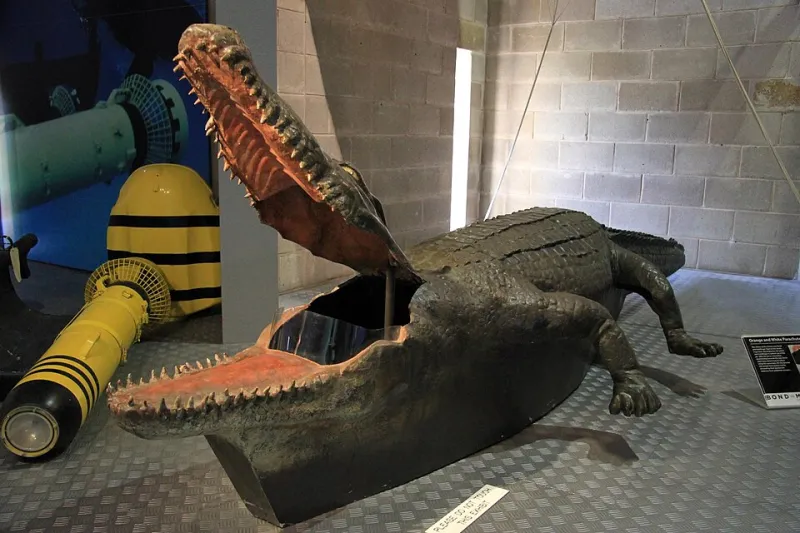
Photo: Unknown photographer, Public domain, via Wikimedia Commons
There was a time when a spy movie could stop dead for a piece of microfilm. A whole act could hang on a cassette, a ledger, or a briefcase chained to a wrist. The object was the plot. It had weight, mystery, and usually a nasty little click when somebody opened it.
In 2026, the most dangerous object in the room is often a shared link with view-only permissions. That is not a complaint, exactly. It is a ranking. Here at 007Eleven, we love the prop. We also know the globe-trotting hunt would now end in a Slack thread and somebody asking, “Can you resend? The attachment expired.”
The Rules of the Flattening
We ranked 11 iconic spy-movie objects by how thoroughly 2026 miniaturization, cloud storage, and file-sharing would flatten them. No. 11 is the least flattened: still physical, still capable of a decent chase. No. 1 is the most flattened: the kind of object that modern tech would reduce to a calendar invite and a passive-aggressive follow-up.
This is affectionate, not cruel. The physical MacGuffin is cinema. But cinema has to survive a world where a PDF from a dentist can feel more ominous than a man in a trench coat.
11. The Handcuffed Briefcase
Still the king of physical drama. A steel briefcase handcuffed to a sweaty wrist says: this contains either money, secrets, or a bomb, and the owner has committed to the bit. In 2026, the contents would probably be a password manager emergency kit and a backup YubiKey. The chase would become a courier scheduling problem. The handcuff is still good theater, but the briefcase is now mostly an accessory for people who overpack for conferences.
10. The Black Leather Ledger
A leather ledger full of offshore accounts is beautiful spy furniture. It thuds when it hits a desk. It smells like cigars and bad decisions. Modern tech would turn it into a Google Sheet called Q4_FINAL_v7, shared with comment access. The villain’s accountant would reply “per my last email,” and someone would request edit permissions. The numbers would still be damning, but the chase would be replaced by an audit trail and a meeting that could have been an email.
9. The Cassette Tape
A cassette has hiss, fragility, and the implied threat that someone will press play with a gun nearby. In 2026, that confession is a voice memo. It auto-transcribes. It syncs to iCloud. The tense playback scene becomes scrubbing a timeline while somebody says, “Wait, go back, I think he said the name of the harbor.” The hiss is gone. So is half the drama. The other half is now a storage notification.
8. The Floppy Disk
The 3.5-inch disk was once the ultimate tiny object. It held secrets, and it fit in a coat pocket. Today it would be a ZIP file and a Google Drive link. The hero would not need a lab; they would need two-factor authentication and enough free storage. The tension of inserting the disk becomes the tension of waiting for a download bar to finish. Somewhere, a villain weeps into a wireless mouse.
7. The Paper Dossier
A redacted dossier is still satisfying. It has weight. It has stamps. It has a photograph clipped to the front like a yearbook from hell. But 2026 has taught us that most redactions are just black rectangles in a PDF, and most leaks are screenshots. The dossier would arrive as a file, get forwarded to the wrong person, and become a group-chat exhibit. The paper version still works in movies because paper can be snatched, burned, and hidden in a piano. A PDF can only be marked “confidential” and ignored.
6. The Microfilm
The microfilm is the purist’s MacGuffin: tiny, archaic, and impossible to read without a special machine. It forced spies into labs, libraries, and dim rooms with glowing viewers. In 2026, somebody would photograph the screen with a phone, run OCR, and turn the whole thing into a searchable PDF in about 90 seconds. The lab scene becomes “Can you resend? The attachment expired.” The microfilm still wins points for being physical, but modern tech has basically made it a very inconvenient thumbnail.
5. The Passport
A fake passport is a classic for a reason. It has a photo, a stamp, and the promise of a border crossing. In 2026, digital IDs live in phone wallets and biometric gates do the staring. The passport still exists, but it is less glamorous. The chase becomes a customer-service call about verification, and the suave border crossing becomes a man taking off his belt while a machine decides whether he is human. Still physical. Still useful. Just not exactly “shaken, stirred, and mysterious.”
4. The Nuclear Football
A briefcase with launch codes is the ultimate “do not lose this” object. It is scary because it is heavy and official. In 2026, it would be an encrypted app, a biometric login, and a second factor sent to a device that is definitely not left in a hotel room. The briefcase would still be there, but it would be a tablet with a sticky note that says “not the WiFi password.” The doom is still real. The drama is now a push notification.
3. The Keycard
The keycard is a small object with big access. It opens doors, vaults, and the villain’s private elevator. In 2026, it is a phone tap, a temporary virtual badge, or a guest WiFi password written on a whiteboard. The tense guard scene becomes “I’ll text you the link.” The keycard still has a place in cinema because people love swiping things dramatically, but the modern version is less “infiltration” and more “I hope my phone has battery.”
2. The Surveillance Photos
A darkroom full of drying surveillance photos is spy-movie poetry. The damning image appears in a red tray. Everybody leans in. In 2026, the same evidence is a camera roll, a shared album, and a Live Photo with location metadata attached. The chase becomes “did you mean to include me?” The villain gets caught because they forgot to turn off automatic upload. The photo is still incriminating. It is just also a thumbnail now.
1. The Handwritten Note
The handwritten note is the most flattened object of all. It is a matchbook, a napkin, a torn page with an address and a time. It implies a rendezvous, a secret, and a person who knows how to fold paper with menace. In 2026, it is a text message, a screenshot, and a disappearing-message setting. The rendezvous is a calendar invite with a video link. The tension is whether someone replies all. The note used to be the beginning of a chase. Now it is the beginning of a thread that could have been an email.
What We Lose, and What We Keep
The physical MacGuffin was never realistic, exactly. It was a storytelling engine. It gave actors something to hold, hide, and fight over. Modern tech does not kill that pleasure; it just makes the chase faster and pettier. The microfilm becomes a file. The ledger becomes a spreadsheet. The briefcase becomes a courier bag with an AirTag.
But we can still love the old objects. They are why spy movies feel like spy movies. They are also why a 2026 audience might laugh when a character risks everything for a piece of film. Somebody would just AirDrop it. Then somebody else would ask for a resend.