Chalk Marks Are Cinematic; Read Receipts Are Not
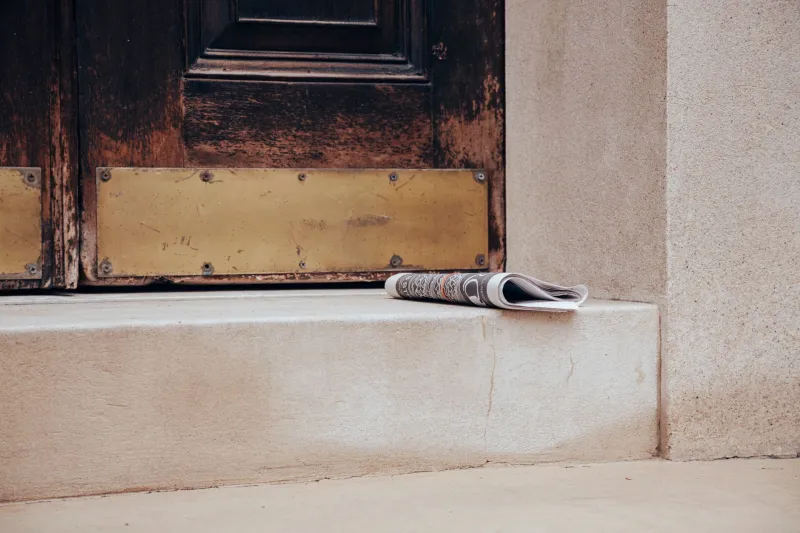
There was a time when the most dangerous object in a spy movie was a park bench with a newspaper on it. Not the newspaper itself, but the fact that someone had left it there, folded at a slightly wrong angle, with a chalk mark on the lamppost nearby. That was cinema. That was a promise. Somebody was about to walk past, pretend not to look, and make a handoff that could end a government.
Now? Somebody sends a thumbs-up emoji and a pin drop.
The Tactile Tradecraft We Lost
The dead drop was spy cinema's love language. A loose brick. A locker key taped under a sink. A payphone that rang exactly once. Microfilm tucked into a hollow heel. A train platform where two strangers stand close enough to exchange a folded racing form and far enough apart to deny everything. These rituals were not just plot mechanics. They were choreography. They gave actors something to do with their hands and audiences something to watch besides a laptop screen.
A chalk mark on a mailbox is a visual riddle. A burner phone buzzing in a coat pocket is a notification. One asks you to lean forward. The other asks you to check your own phone.
The Analog Classics Still Teach the Master Class
The best dead-drop scenes work because they turn ordinary public spaces into minefields. The Third Man made a ferris wheel and a sewer feel like a boardroom for betrayal. The Spy Who Came in from the Cold understood that a gray London street could be more lethal than a casino. Tinker Tailor Soldier Spy turned a Christmas party and a filing room into a chess match where the pieces were people. Even The Americans, a show built on wigs and family dinners, made a mailbox drop feel like a hostage negotiation.
Then there is Bridge of Spies, which staged an exchange on the Glienicke Bridge with the calm of a dentist appointment and the stakes of a nuclear standoff. No one texts. No one AirDrops a confession. Two men walk across a line. That is the whole scene. It is unbearable.
What 2026 Spy Stories Do With Phones
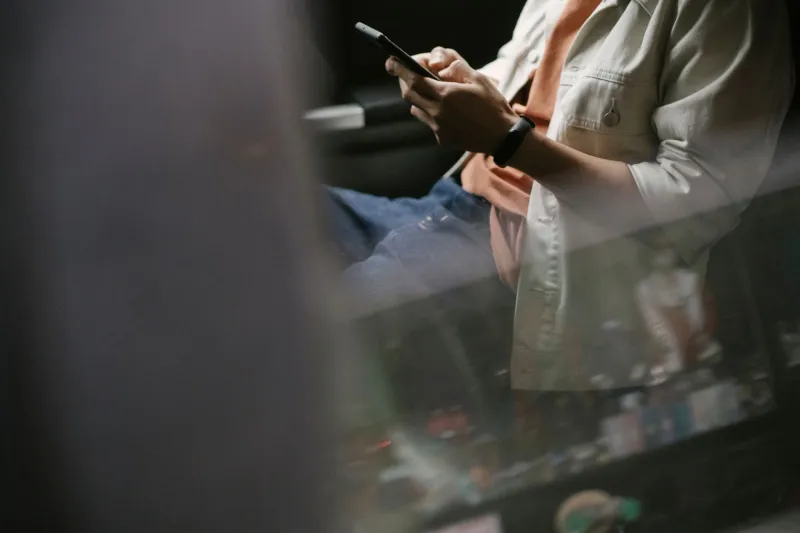
This year's spy output has not ignored the smartphone. It has surrendered to it. Characters trade encrypted messages, disappearing photos, and location pins. The shows and films are trying to be realistic, and realism is noble. But realism has a cost: a group chat is not a set piece. A character staring at three bouncing dots is not suspense. It is customer support.
Some 2026 productions have tried to make digital communication cinematic. Split screens. Notification jump scares. A phone left faceup on a dinner table like a tiny time bomb. These are good starts, but they still feel like a compromise. The audience knows the difference between a character reading a message and a character sliding a microfilm into a coat pocket while a violin section holds one note.
The problem is not that phones are boring. The problem is that phones are private. Cinema is public. A dead drop happens in the open, where anyone could see. A text happens in a pocket, where only the character can see. That is why a chalk mark on a wall feels like a threat and a read receipt feels like a monthly bill.
A Modest Proposal for Cinematic Encryption
Filmmakers do not need to ban smartphones. They need to give them physical consequences. Make the phone a prop with weight. A cracked screen. A dying battery. A wrong AirDrop sent to the entire wedding reception. A smart speaker that repeats a code phrase at the worst possible moment. A geofenced dead drop that only opens if the courier stands on the right subway grate.
Better yet, mix the analog and the digital. Let a character receive an encrypted message that tells them to find a physical token. Let the token be a library book with a train ticket inside. Let the train ticket lead to a payphone that no longer works, except it does, once, at 3:17 p.m. That is how you make encryption feel like a magic trick instead of a software update.
The Dead Drop Is Not Dead; It Is Just Waiting for a Better Script
Spy cinema has always been about the gap between what people say and what they mean. The dead drop was perfect because it made that gap visible. A folded newspaper on a bench is not just a newspaper. It is a question: Who left it? Who will take it? Who is watching?
A text message can ask the same question, but it has to be staged with the same care. The future of spy cinema is not analog nostalgia. It is new grammar for old anxieties. Give me a phone that behaves like a loaded gun. Give me a notification that feels like a knock on the door. Give me one scene in 2026 where a character has to delete a message with the same trembling precision that Bogart used to light a cigarette.
Until then, I will be on the park bench, waiting for someone to leave a newspaper. And I will be checking my phone, just in case.